
If you want to surf the best waves of your Sri Lanka trip, you need to understand the forecast - not just read a wave-height number. Here's how the south coast works, and which forecasting sites we actually use at The Surfer.
The basics of Sri Lanka surf forecasting
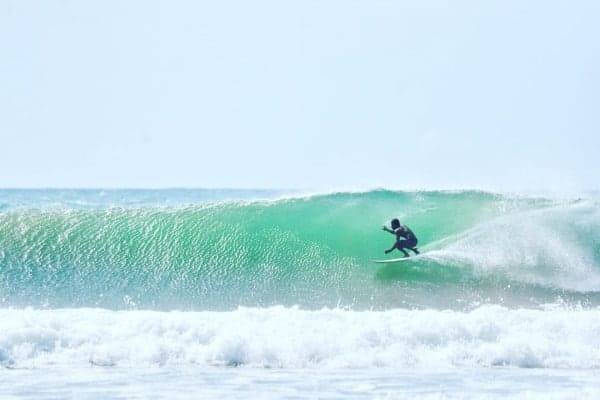
Wave-height number alone is misleading. A 1-metre swell with offshore wind and a long period can be beautifully shaped chest-high waves. A 1-metre swell with onshore wind and a short period can be a choppy mess. You have to read four things together: swell size, swell period, swell direction, and wind direction.
Swell size (Weligama south coast)
Best beginner range: 0.6–1.2 m. Soft, rolling, easy to catch. This is most days in October to April.
Best intermediate range: 1.2–1.8 m. Real wave shape, faster rides, room for progression.
Advanced: 1.8 m+ swells make the outer reefs and points come alive. You'll want a boat to access some of them.
Anything above 2.5 m on the bay starts to get washy - better to head to outer reefs.
Swell period
This is the seconds between waves. Short period (8–10 sec) means weaker, wind-generated swell. Long period (12–16+ sec) means powerful ocean-generated swell - better shape, more push.
In Sri Lanka's south-west season (Nov–Apr) the typical period is 10–14 seconds - clean, organised waves.
Swell direction
Weligama Bay faces south. Swells from south-west to south-south-west wrap into the bay beautifully. South-east swells don't reach the south coast at all.
Wind direction
Mornings in the Weligama dry season (Nov–Apr) are reliably offshore - winds coming from the north or north-east blow against the wave face, holding it up clean.
By afternoon (usually after 11 am or noon), winds often turn onshore from the south-west. Waves get choppier. This is why every surf camp here runs morning lessons.
Surf forecasting sites we use
Surfline: Most popular globally. Has Sri Lanka coverage but can be slow to update.
Magicseaweed (MSW): Was the standard for years. Now folded into Surfline.
Windy.com: Excellent for wind direction - overlay swell on top.
WindFinder: Quick wind check for the next few hours.
Stormrider Asia: Good general info on the region.
Honestly: ignore the long-range (10-day) forecasts. They're guesses. Trust the 48-hour forecast and check it the night before.
Tides in Weligama
Weligama Bay is largely tide-agnostic for beginners - the bay works at most tide stages. For intermediates, mid-tide pushing high is generally best. Outer reefs care more about tide.
Tide range in Sri Lanka is small (around 0.5 m), so it's never as critical as it is in places like Indonesia or Portugal.
What we tell beginner guests
Don't worry about the forecast. Show up for your morning lesson, your instructor reads the conditions and adapts. That's literally their job.
What we tell intermediate guests
Check Windy.com the night before. If you see: - Wind under 10 knots from the N or NE, - Swell 1.0–1.8 m from the SW, - Period 11+ seconds, …you've got a beautiful morning ahead. Get to the beach by 7 am.
What if forecast says "no waves"?
There's almost always SOMETHING at Weligama Bay in season. Even on smaller days, beginner whitewater is still rideable. We've never had to cancel a lesson due to flat conditions in peak season.
Where to surf when the bay is too small
Plantations (10 min east) - picks up smaller south swells. Madiha Beach (10 min east) - works on tiny days. Outer reefs (boat access) - bigger swells.
Where to surf when the bay is too big
Inner reefs and the inside of the bay still work. Or go to a more sheltered beach like Mirissa.
The takeaway
Sri Lanka's south coast in winter is one of the most consistent surf destinations in the world. The forecast is rarely a problem - October to April you'll get plenty of surf days. Just pay attention to morning vs afternoon (always surf mornings if you can) and trust your instructor's call on the day.
Ready to come surf with us? See our /rates or contact us in English or German.
You do not have to read the forecast on your own, either. Our ISA-certified coaches choose the session times each day around the tide and the wind, which is most of the value of a coached week. See how that works at The Surfer Beach Camp, or compare all three camps on the rates page.
Written by The Surfer Surf Camps Team
Surf camp operators, Weligama, Sri Lanka
The team running three surf camps on Weligama Bay in southern Sri Lanka, in the water on this coast every day of the November-April season.
Ready to ride?
Book your surf experience with The Surfer